

Buying a Home in Cascais: What an Inspection Reveals

Updated: Sep 24

You arrive for the viewing and see what most buyers see first: the beautifully renovated kitchen, the natural light, the garden and the possibility of making the property your own.
But a property inspection looks at the house differently.
Instead of simply asking whether the property looks good, an inspector is looking for clues about how it is performing — signs of moisture, previous repairs, roof and drainage problems, window and door issues, cracks, leaks and other defects that may not be obvious during a normal viewing.
That doesn't mean looking for problems where none exist. It means understanding what the small details may be telling you before you commit to the purchase.
So, if you're buying a home in Cascais, come with me through a typical inspection and see what catches my attention — before the buyer even walks through the front door.
Before We Even Walk Through the Front Door
Most buyers head straight inside, but the inspection begins long before the front door opens.
The roof. The gutters. The way the ground slopes around the house. The condition of the exterior walls. Individually, they may not seem important. On their own, they may not seem important. Together, they begin to reveal how the property has performed over time.
Whether it's a Villa in Cascais, an apartment in Lisbon, or a family home elsewhere in Portugal, the outside of a property often reveals far more than most people realise.
The First Thing That Gets My Attention
Once inside, most buyers admire the finishes and picture where the furniture will go.
I pause. Sometimes the first clue isn't something you can see—it's something you can smell.
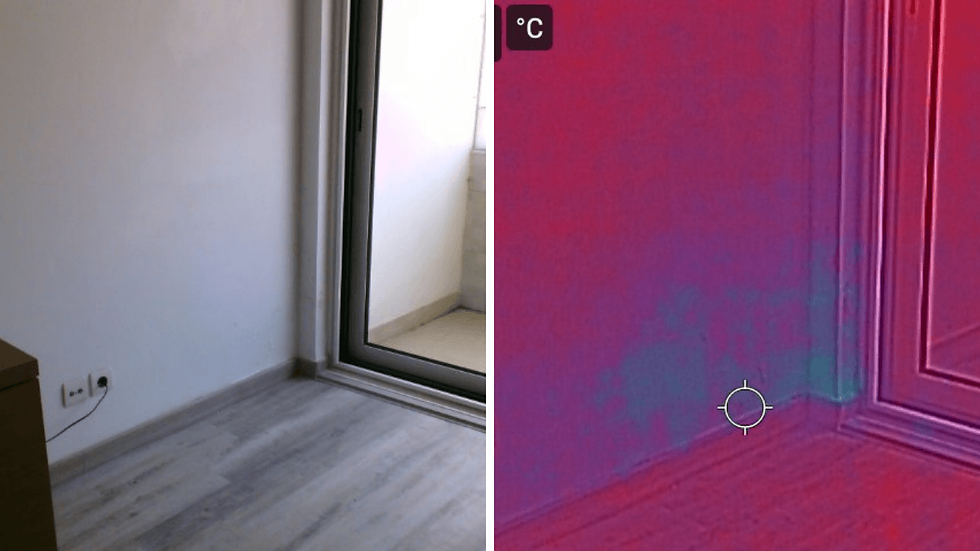
A damp or musty odour doesn't automatically point to a serious problem, but it deserves attention. Moisture often leaves subtle signs long before stains appear on walls or ceilings.
That's why an inspection relies on more than what can be seen with the naked eye. Thermal imaging and moisture detection equipment help investigate beyond the surface and provide a clearer understanding of what's happening inside the building.
The Wall That Looked Perfect
Fresh paint makes a home feel bright, clean, and well-cared-for, and most of the time, that's exactly what it is.
But if one wall looks noticeably newer than the rest, or one section of the ceiling has recently been painted, it's natural to wonder why. Has there been a repair? Was there a leak? Has the source of the moisture been resolved?
Fresh paint isn't the concern. Sometimes it's simply fresh paint.
Sometimes it's hiding yesterday's problem. The important thing is understanding the difference.
The Window Everyone Looked Through
While your eyes are drawn to the view outside, mine are drawn to the window itself.
The frame, the seals, the corners, how it opens and closes, and whether there are signs of previous water entry can all provide valuable clues. Windows are often one of the first places where moisture finds its way into a home. Small gaps may seem insignificant, but over time they can affect surrounding plaster, paint, and timber.
The Crack That Made Me Stop
One of the questions I hear most often is, "Should I be worried about that crack?"
There isn't one simple answer. Some cracks are simply part of a building settling naturally over time, while others tell a different story.
It's never just about the crack itself. Its location, direction, width, and whether similar movement appears elsewhere in the property all help build a clearer picture. A single crack rarely tells the whole story. The building usually does.
The Bathroom That Looked Spotless
Bathrooms deal with water every day, but they shouldn't have water escaping into places it doesn't belong.
A failed silicone seal, a slow plumbing leak, or moisture behind the shower may not be obvious during a viewing. By the time visible damage appears, the problem has often been developing quietly for much longer. That's one reason a pre-purchase property inspection can be valuable when buying a home in Portugal.
Looking Back Up
Before leaving, my attention always returns to the roof.

It's one of the most important parts of any home, yet it's also one of the least seen. From ground level, it's almost impossible to assess its condition properly.
As part of a professional property inspection, drone technology allows the roof, flashing, valleys, and gutters to be viewed safely and in far greater detail than a standard viewing ever could.
It's Never Just One Thing
A sticking door, a slightly uneven floor, a patch of peeling paint, or condensation on one window may not mean very much on their own.
A professional property inspection isn't about one isolated observation. It's about recognising patterns.
When several small clues begin to connect, they often reveal a much clearer picture of the home's overall condition.
Buying a Home in Cascais: Before You Fall in Love With the House
It's easy to be drawn to the features that make a property feel like home. The modern kitchen, the natural light, the beautiful garden, or the perfect location all leave a lasting first impression.
Before making an offer, pause for a moment and ask yourself a few simple questions.
Why has only this one wall been repainted?
If there's a damp smell today, what might the house feel like after a week of winter rain?
Where does rainwater go once it leaves the roof?
Why does one window have condensation while the others don't?
Why does one door stick when every other door closes perfectly?
Has that crack always been there, or is it changing?
What does the roof actually look like from above?
Am I buying only what I can see... or am I also buying everything I can't?
These aren't questions designed to make you nervous.
They're simply the kinds of questions an experienced property inspector naturally asks when inspecting a home.
Sometimes the answers confirm you've found exactly the right property.
Sometimes they uncover issues that deserve a closer look before you commit.
Either way, asking the right questions before you buy is always better than wishing you had afterwards.



Comments