

Buying a Recently Renovated Property in Cascais

Updated: Sep 23
A recently renovated property can make an excellent first impression. But before you commit to buying, it is worth understanding exactly what has been done and whether the renovation goes beyond what you can see.

Renovations can range from simple cosmetic improvements to extensive work involving plumbing, electrical systems, roofing, insulation and waterproofing. For buyers looking at properties in Cascais, Lisbon or elsewhere in Portugal, the important question isn't simply whether a home has been renovated, but what was updated, how the work was carried out, whether it was properly documented and what condition the property is in today.
What Was Actually Included in the Renovation?
Start by establishing what changed.
Ask when the renovation took place and whether the work went beyond the visible finishes.
A property might have a brand-new kitchen while retaining its original plumbing and electrical wiring. Another may have undergone a much more extensive refurbishment involving upgraded services, roof repairs, insulation and other building improvements.
These represent very different levels of renovation.
Ask for a clear description of the work and, where available, supporting evidence such as contractor invoices, product warranties and photographs taken during the renovation. This can help establish which components were replaced, repaired or simply retained.
Understanding the scope of the work gives you a more realistic picture of the property than its finished appearance alone.
What Documentation Is Available for the Work?
Documentation can help fill in the gaps between what you can see and what happened during the renovation.
Depending on the scale of the project, useful records may include invoices, warranties, specifications for installed equipment and information about contractors who carried out significant work.
The age of the renovation is also relevant. A recently completed refurbishment may have more documentation available than work carried out many years ago.
The purpose is not to collect paperwork for its own sake. It is to establish a clearer history of the property and understand which parts of the building have been modernised and which may still be original.
This information can also help an inspector understand the property's history when assessing its current condition.
Were the Renovations Legally Approved by the Câmara?
The physical condition of a renovated property is only part of the picture. It is also important to establish whether significant alterations were properly authorised and recorded.
Depending on the type and extent of the work, changes such as moving structural or internal walls, enclosing balconies, altering the property's footprint or making substantial changes to building systems may require municipal approval, permits or updated plans.
This becomes particularly important where the property you see today differs from the documentation held by the municipality or recorded in the property's official documents.
Unapproved alterations or discrepancies can create complications during a purchase and may affect financing, future resale or the process of regularising the property.
For this reason, your lawyer or other appropriate property professional should verify the legal status of significant alterations with the relevant Câmara Municipal and compare the property's current configuration with the available official documentation.
Legal compliance and physical condition are separate checks. An independent property inspection assesses the building itself; it does not replace legal due diligence.
Could Previous Damp or Water Damage Still Be a Concern?
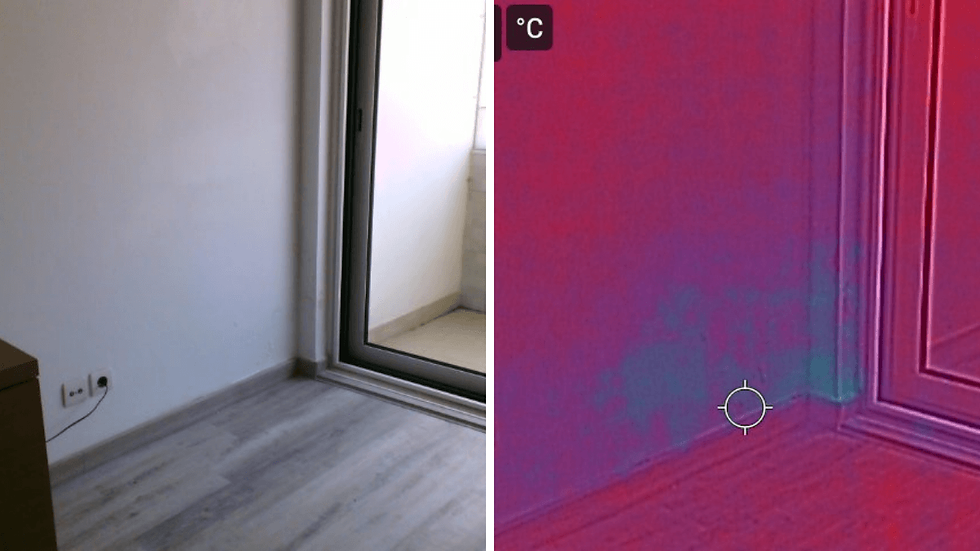
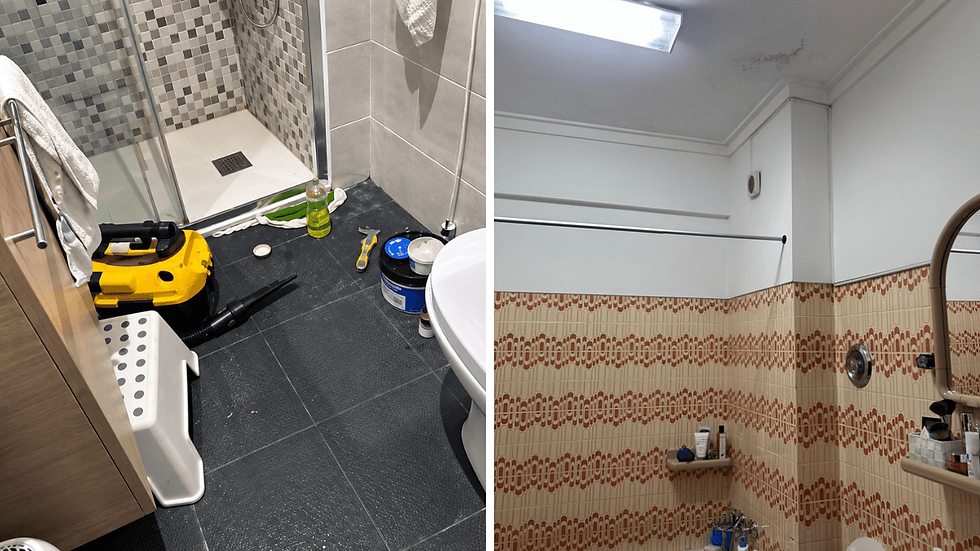
Freshly painted walls and new finishes can make it hard to tell whether a property has had moisture problems before.
Repainting is normal when preparing a property for sale and, by itself, does not indicate a damp issue.
The important question is whether any previous moisture problem was properly identified and resolved.

In Cascais, moisture can enter a property through roof defects, plumbing leaks, terraces and balconies, failed waterproofing, exterior cracks or drainage problems. Condensation can also contribute to excess moisture and mould.
If there has previously been staining, mould or water damage, ask what caused it and what work was carried out to address the source.
An inspection can investigate areas where moisture is not immediately visible. Moisture measurement and thermal imaging can help identify areas requiring further investigation without immediately disturbing finished surfaces.
Were the Plumbing and Electrical Systems Upgraded?
A new kitchen or modern bathroom does not necessarily mean that the services behind them are new.
Ask whether the plumbing was replaced or whether existing pipework was retained. The same principle applies to the electrical installation.
Modern sockets, switches and light fittings can make a property look completely updated without meaning that the underlying wiring has been replaced.
Where documentation is available, it can help establish what work was carried out. An independent inspection can then assess accessible components and identify areas that may warrant further investigation.
This distinction is particularly important in older Portuguese properties, where parts of the original installation may remain alongside newer fixtures and finishes.
What Is the Condition of the Roof and Exterior?
A beautifully renovated interior can draw attention away from the parts of the building that protect it from the weather.
Before buying, consider the condition of the roof, external walls, balconies, terraces, gutters and drainage.
Roof tiles, flashings, waterproofing and drainage components can deteriorate even when the rooms below look newly finished. Previous leaks may also have resulted in internal repairs that are no longer obvious.
Where access permits, these areas should form part of the overall property assessment.
For difficult-to-access roofs, a drone inspection can provide useful visual information without requiring physical access to every roof area.
Looking at the exterior is particularly important because defects in the building envelope can eventually affect the interior.
Has the Renovation Improved the Building's Performance?
Not every renovation is intended to improve energy efficiency or the performance of the building itself.
A property may have a completely modern interior while retaining original windows, limited insulation or older ventilation arrangements. For buyers in Portugal, it is therefore worth establishing whether the renovation improved these areas, particularly where they affect comfort, ventilation and energy use.
This can be particularly relevant in older Portuguese properties, where traditional construction methods and materials can affect how a building responds to heat, humidity and ventilation.
The finished interior tells you what has changed visually. It does not necessarily tell you how the building performs.
Why Consider an Independent Property Inspection When Buying a Recently Renovated Property in Cascais?
Once you understand the renovation and its documentation, the physical condition of the property still needs to be assessed.
An independent property inspection can examine accessible areas of the structure, roof, exterior, moisture conditions, plumbing and electrical systems, depending on the scope of the inspection.
Specialist equipment can provide additional information where appropriate. Thermal imaging can identify temperature differences that may warrant further investigation, while moisture measurement can help assess areas where dampness is suspected.
The purpose is not to assume that a recently renovated property has hidden defects. It is to establish its present physical condition rather than relying entirely on its appearance or the description of the renovation.
Making an Informed Decision
A recently renovated property can be an excellent purchase, particularly when the work has been carried out thoroughly and the property's documentation is in order.
Before committing, take the time to establish the history of the renovation, the legal status of any significant alterations and the current physical condition of the property.
Legal due diligence and a physical property inspection are two separate parts of the buying process. Legal due diligence establishes whether the property's documentation, alterations and approvals are in order. A physical inspection assesses the condition of the building and its systems. One does not replace the other.
For buyers looking at buying a recently renovated property in Cascais, an independent pre-purchase property inspection can help identify issues that may not be immediately apparent and give you a clearer understanding of the property's condition before you commit.
The aim is not to question a renovation. It is to know exactly what you are buying.


Comments