

ERMI Testing: Identifying Hidden Mould in Portuguese Homes

Persistent mould isn't always a cleaning problem. In many cases, it's a sign of hidden moisture within the building. The challenge is identifying where that moisture is coming from and whether it has created conditions for mould to thrive. That's where ERMI testing, combined with a professional property inspection, can provide the evidence needed to move beyond guesswork.
When our client contacted us, they reported persistent health symptoms linked to their indoor environment. We were tasked with moving beyond speculation to identify what was truly happening inside the property.
Surface cleaning and visual inspections had already been attempted. Yet, the problem kept returning. This is a common pattern in moisture-related properties: visible mould is merely a symptom, not the source.
To understand the full picture, we needed environmental data—not assumptions.
Beyond the bleach: How we use diagnostic data to find hidden mould sources.
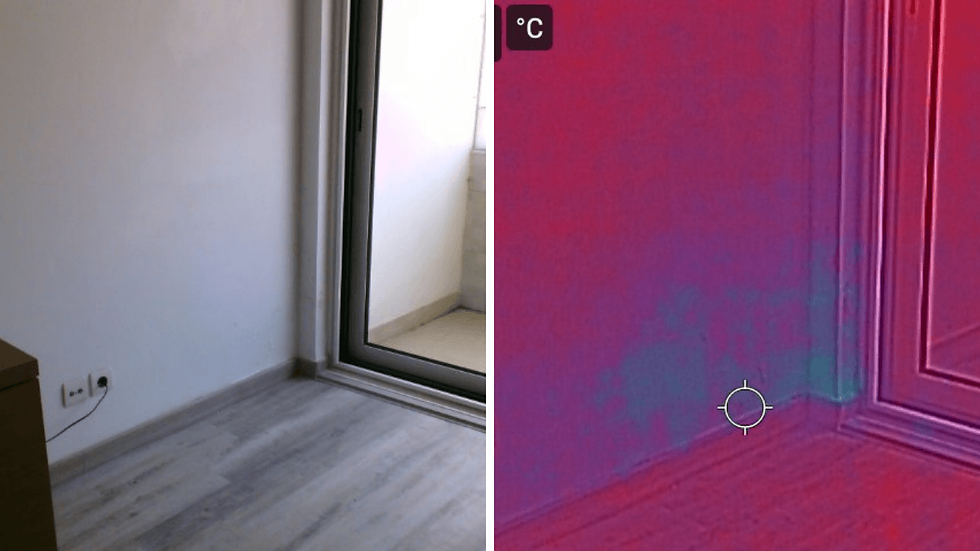
Using our environmental monitoring equipment, including EMF and moisture detection, we identified the specific structural 'moisture paths' the owners couldn't see.
ERMI Testing Results and Decision-Making
After conducting a physical inspection and subsequent laboratory analysis, we obtained a clear, evidence-based picture of the property's indoor environment. To move beyond surface observations, dust samples were collected from ten separate locations throughout the home. These samples were submitted for ERMI Testing (Environmental Relative Moldiness Index) analysis. This type of testing serves as a long-term biological record of the indoor environment, identifying mould species commonly associated with water-damaged buildings.
ERMI Testing Laboratory Findings
The ERMI analysis returned a score of 42.7, indicating an elevated relative mould burden compared to typical indoor environments. Additionally, the HERTSMI-2 score of 40.0 reflected a significantly increased presence of mould species associated with chronic moisture and water-damaged building materials.
The laboratory analysis identified elevated concentrations of several Group 1 species linked to moisture-damaged environments, including:
Aspergillus fumigatus
Eurotium amstelodami
Aspergillus versicolor
Trace levels of Stachybotrys chartarum
These findings, when considered alongside the physical inspection, indicated long-term moisture-related conditions within the property rather than isolated surface contamination.

Correlation with Physical Inspection
While laboratory analysis provides biological evidence, identifying the source of moisture requires a physical investigation. During our inspection, thermal imaging and moisture mapping revealed chronic moisture intrusion affecting sections of the external walls and areas around deteriorating window seals. Elevated moisture readings confirmed that parts of the building envelope were retaining excessive moisture, creating conditions favorable for continued mould growth.
The laboratory findings and physical inspection results supported one another, allowing us to move from speculation to evidence-based conclusions.

A Real-World Indicator
While awaiting the laboratory results, the occupants hosted a visitor known to have a high sensitivity to mould. Shortly after arriving, the individual experienced symptoms that raised concerns about the indoor environment. Although anecdotal observations cannot establish causation, they served as a practical indicator that further investigation was warranted. The subsequent inspection and laboratory analysis provided objective information that allowed informed decisions to be made.
Remediation and Monitoring Strategy
Despite the report recommending consideration of relocation, the occupants chose to remain in the property. As conditions transitioned into the drier summer months, the strategy focused on immediate remediation combined with long-term risk management.
Professional Remediation
A specialist remediation company was engaged to perform a comprehensive treatment program using professional-grade mould remediation products and fogging techniques to reduce existing contamination.
Building Envelope Maintenance
The inspection identified moisture intrusion associated with porous exterior walls and deteriorating window seals. Corrective maintenance was recommended to address these defects before the return of the wetter winter season.
Verification Through Monitoring
Remediation is only one part of the process. Long-term success depends on confirming that the moisture source has been eliminated. Comparative moisture measurements will be taken at the end of summer and again during winter. This will determine whether the building envelope repairs have successfully prevented moisture accumulation and reduced the risk of recurrence.
Key Takeaway
Remediation is only half the battle. Our protocol mandates follow-up testing and moisture mapping to ensure that building envelope repairs have successfully eliminated the source of the mould.
Before any remediation begins, we perform a comprehensive Property Inspection to identify these underlying moisture pathways. This ensures the root cause is resolved alongside the visible growth.
By combining physical building diagnostics with laboratory analysis, we can identify not only the presence of moisture-related mould species but also the conditions allowing them to persist. Lasting remediation depends on correcting those conditions and verifying that the building environment no longer supports mould growth.
Note: Where health concerns persist, we always advise clients to consult with a medical professional regarding potential exposure to mould-related compounds. Our role is to identify and resolve the environmental source of the problem, ensuring a safer living environment through empirical evidence and strategic maintenance.
Conclusion
Mould is rarely the real problem. In most cases, it is the result of hidden moisture that has gone undetected over time. By combining ERMI testing with a comprehensive property inspection, it's possible to identify both the biological evidence of mould and the building defects allowing it to develop. Addressing the source—not just the visible mould—is the key to creating a healthier indoor environment and reducing the likelihood of the problem returning.



Comments