

Hidden Damp Behind Walls in Portugal

Updated: Oct 1
Damp problems are not always visible inside a property. In some homes, drywall or gypsum board has been installed in front of existing masonry walls, creating a cavity where moisture can remain hidden from view.
When an underlying damp problem has not been resolved, covering the affected wall does not stop the moisture. Instead, the enclosed space behind the drywall can restrict airflow and make it more difficult for the original wall to dry. Over time, elevated humidity within the cavity can create conditions that encourage hidden mould growth and deterioration of the gypsum board.
Because gypsum board typically includes a paper facing, prolonged exposure to moisture can provide a suitable surface for mould growth. By the time staining, musty odours, or visible mould appear inside the room, the problem behind the wall may already be more extensive.
This is why identifying the source of the moisture is essential before covering, replastering, or redecorating a damp wall.
How Hidden Damp Behind Walls Develops
During one inspection of a property affected by significant damp, drywall had been installed throughout much of the house, concealing mould and damp staining on the original walls.
The drywall appeared to have been installed over the affected walls, concealing the visible mould and damp staining beneath.
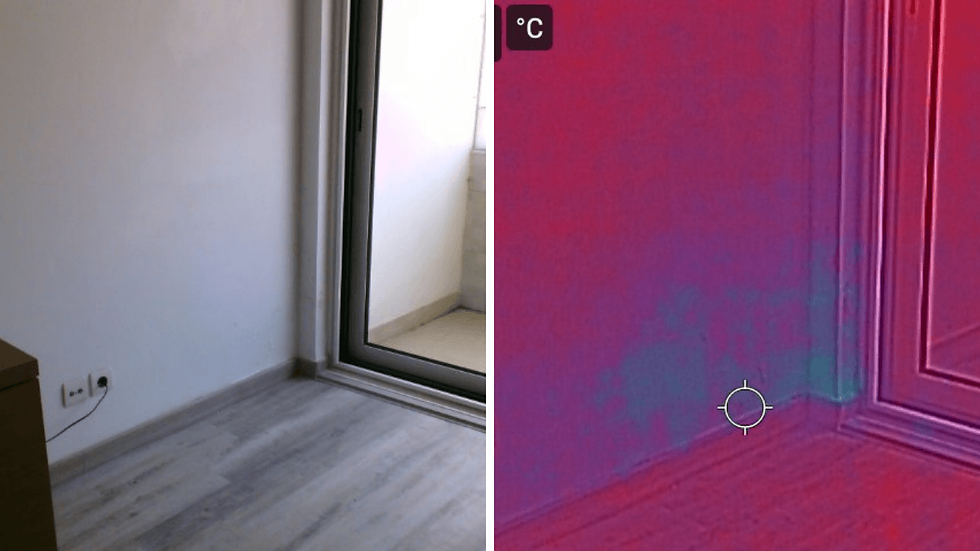
However, thermal imaging and moisture readings taken with the Protimeter

Surveymaster indicated that moisture was still present behind the drywall. With little airflow within the cavity between the drywall and the original wall, conditions had developed that allowed moisture and humidity to remain trapped behind the boards.
Removing all the drywall would have required extensive demolition and considerable disruption for the occupants. While removing affected materials may sometimes be necessary as part of a long-term solution, this was not immediately practical in this particular case.
As an interim measure, ventilation openings were considered to improve airflow within the cavity and help reduce humidity while the underlying source of the moisture was investigated.
It is important to understand that ventilation does not resolve the hidden damp behind walls. In this case, it was considered as a temporary measure based on the specific circumstances of the property, rather than a permanent solution to the underlying moisture problem.
Why the Underlying Damp Problem Must Be Solved
While ventilation may help reduce humidity in some situations, the long-term solution is to identify and address the original source of moisture.
Damp within walls can have several causes, including rising damp, water penetration through exterior walls, roof leaks or damaged flashing, poor sealing around windows and doors, hidden plumbing leaks, and condensation caused by high indoor humidity. Cracks and other building defects can also provide pathways for water ingress and may require further investigation.
If the source is not properly diagnosed and repaired, covering the visible symptoms will not solve the problem. Moisture may continue to develop behind the wall surface and eventually become visible again.
A professional damp inspection may combine visual assessment, thermal imaging, and moisture meter testing to help trace the moisture and identify its likely source. Once the cause has been established, the appropriate repairs can be carried out before plastering, painting, or other cosmetic finishes are applied.
Understanding where the moisture is coming from is the key to avoiding repairs that simply conceal the problem rather than resolving it.
Frequently Asked Questions About Damp Behind Drywall
Can drywall hide damp problems in a wall?
Yes. Drywall can conceal visible damp staining and mould, but covering the wall does not resolve the source of the moisture. If damp remains behind the boards, moisture may continue to accumulate within the cavity.
Why does mould grow behind drywall?
Where moisture is present and airflow is limited, the cavity behind drywall can create conditions that support hidden mould growth. Paper-faced gypsum board can also be vulnerable to prolonged moisture exposure.
Is installing drywall a solution for damp walls?
No. Installing drywall over a damp wall does not address the underlying cause of the moisture. The source of the damp should be identified and addressed before cosmetic finishes or wall coverings are applied.
How can hidden damp behind drywall be detected?
Hidden moisture may be investigated using a combination of visual inspection, thermal imaging, and moisture testing, such as the FLIR E8 Pro thermal camera and Protimeter Surveymaster moisture meter, which can help identify temperature anomalies and elevated moisture readings that may warrant further investigation.



Comments