

The 5 Most Common Moulds Found in Portuguese Homes

Updated: Aug 14
Mould is one of the most common problems we encounter during property inspections across Portugal. Whether we're inspecting a modern apartment in Lisbon, a family home in Cascais or an older villa along the coast, the story is often the same. Moisture has found its way into the building, and mould has taken advantage of the conditions.

Many homeowners assume the mould itself is the problem. In reality, mould is usually a symptom rather than the cause. It tells us that somewhere within the property, moisture is lingering for longer than it should. That moisture may be the result of condensation, inadequate ventilation, a concealed plumbing leak, water ingress through the roof or walls, or poor insulation creating cold surfaces where water vapour can collect.
Portugal's climate creates ideal conditions for this to happen. Coastal humidity, seasonal rainfall and cooler winter temperatures all contribute to condensation and dampness inside homes. Older properties can be particularly vulnerable, especially where insulation is limited or ventilation has been reduced during renovations. Holiday homes that remain closed for long periods can also experience elevated humidity, allowing mould to develop unnoticed.
During a professional inspection, our objective is not simply to record where mould is visible. We investigate why it has developed in the first place. By tracing the source of the moisture, we can help homeowners and buyers understand the underlying condition of the property before minor problems become expensive repairs.
In this blog, we'll explain the five most common types of mould in Portuguese homes, where they typically develop, what causes them, and what they can reveal about a property's condition.
Why Mould Is So Common in Portuguese Homes
Every home contains mould spores. They are a natural part of the environment and are constantly present in the air both indoors and outdoors. Mould only becomes a problem when those spores find the moisture they need to grow.
In Portugal, that moisture often comes from condensation rather than dramatic leaks. Warm indoor air meeting cold walls or windows creates water droplets that repeatedly dampen surfaces. If those areas do not dry properly because of limited ventilation or consistently high humidity, mould begins to establish itself.
This is why simply cleaning mould rarely provides a long-term solution. Removing the visible staining may improve the appearance of a room, but if the moisture remains, the mould is likely to return.
Understanding the conditions that encourage mould growth is far more valuable than concentrating on the mould alone.
Cladosporium
Cladosporium is one of the moulds most commonly associated with indoor environments and is frequently encountered in homes affected by regular condensation. It often develops around window frames, timber surfaces, curtains, carpets and other materials that are repeatedly exposed to moisture.
Cladosporium is often linked to rooms with poor air circulation rather than major structural defects. Bedrooms, living rooms and enclosed spaces where windows remain closed for long periods are typical examples.
Although this type of mould is commonly associated with condensation, every property should still be investigated individually to establish why excessive moisture is present.
Penicillium
Penicillium develops readily on damp building materials and is often associated with properties that have experienced prolonged humidity or previous water damage. It may appear on wallpaper, timber, plasterboard and stored belongings where moisture has remained trapped.
Penicillium is generally found in homes that have been left unoccupied for extended periods or where ventilation has been restricted. Holiday properties that remain closed throughout the winter can be particularly susceptible if humidity is allowed to build up indoors.
Its presence is often an indication that moisture has persisted long enough for mould to spread beyond the surface.
Aspergillus
Aspergillus is another mould commonly associated with indoor environments. It may develop in areas affected by dampness, settled dust, insulation or poor ventilation. Because it is widespread both indoors and outdoors, its presence usually reflects favourable environmental conditions rather than a single identifiable defect.
It is important to remember that mould species cannot be confirmed through visual inspection alone. Many moulds appear similar, and laboratory analysis is required to identify specific species accurately.
If laboratory identification is required, our article on ERMI mould testing explains how indoor mould can be analysed in greater detail.
During a property inspection, our focus is on identifying the moisture conditions that have allowed mould to develop rather than attempting to identify mould solely by appearance.
Alternaria
Alternaria is commonly associated with areas that remain damp for extended periods. Bathrooms, kitchens, laundry rooms and cold external walls often provide the conditions it needs to develop.
When mould is found in these locations, we pay particular attention to ventilation, extraction systems and condensation patterns throughout the property. In many cases, improving airflow and reducing indoor humidity forms an important part of preventing future mould growth.
Persistent condensation should never be dismissed as a normal part of living in a property. Over time it can contribute to deterioration of finishes and encourage mould to return repeatedly.
Stachybotrys
Stachybotrys is probably the best-known household mould because it is frequently referred to as black mould. Despite its reputation, it is not the most common mould found during property inspections.
This mould is generally associated with building materials that have remained wet for extended periods, such as plasterboard, wallpaper and timber affected by ongoing water ingress. Where conditions suitable for Stachybotrys exist, our priority is identifying why those materials have remained damp rather than concentrating solely on the visible mould.
Long-term moisture problems require thorough investigation to determine whether the source is a concealed leak, failed waterproofing, roof damage or another building defect.
Why Professional Moisture Investigation Matters
Visible mould is often only part of the story. The underlying cause may be hidden behind walls, beneath flooring, within roof structures or inside poorly ventilated cavities, where damp conditions can remain undetected for months.

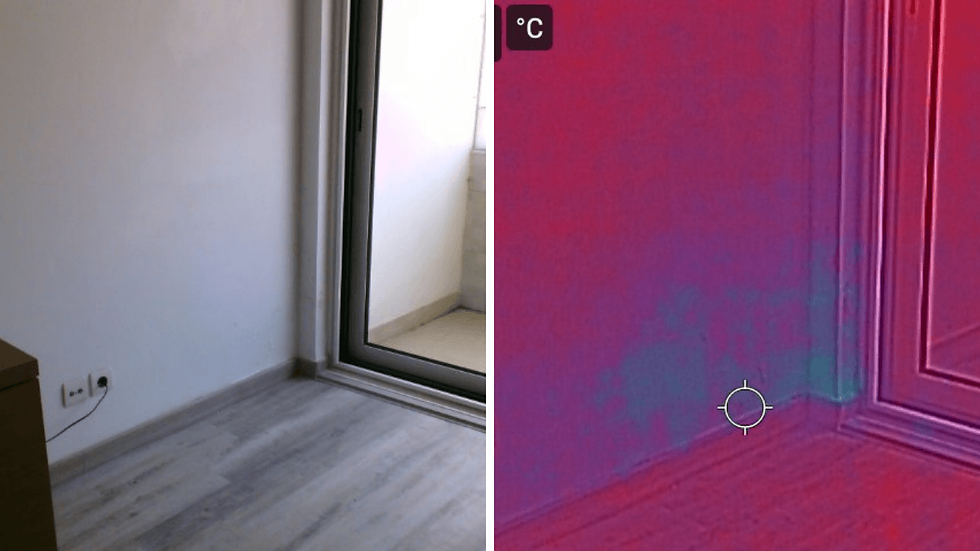
During an inspection, we combine a detailed visual assessment with advanced diagnostic equipment, including FLIR thermal imaging cameras, Protimeter moisture meters and other specialist tools to investigate conditions that cannot be seen with the naked eye.
This approach allows us to trace hidden moisture pathways, distinguish between condensation and water ingress, and gain a more complete understanding of a building's condition.
Whether you are purchasing a home, investigating recurring damp, or maintaining an investment property, finding the source of the problem is always more effective than repeatedly removing the visible signs.
Final Thoughts
Mould should never be ignored, but neither should it be viewed in isolation. In most cases, it is an indication that excess moisture is present somewhere within the building.
By establishing why damp conditions exist, homeowners can address the underlying issue before it develops into more extensive damage, costly repairs, or ongoing indoor environmental problems.
A professional property inspection goes beyond what can be seen on the surface. It helps uncover hidden defects, explains why mould is developing, and provides the information needed to make informed decisions about maintaining or purchasing a property.
Frequently Asked Questions
Can mould be removed permanently?
Mould can usually be cleaned from affected surfaces, but unless the underlying moisture problem is resolved, it is likely to return.
Why is mould so common in Portugal?
Portugal's coastal climate, seasonal humidity and variations in insulation and ventilation create conditions that can encourage condensation and mould growth, particularly during the cooler months.
Can you identify mould by looking at it?
No. Many moulds have a similar appearance. Laboratory testing is required to identify individual mould species accurately. During an inspection, the priority is identifying the source of the moisture that has allowed mould to develop.
Should I be concerned if I find mould before buying a property?
Visible mould does not necessarily mean a property has a serious defect, but it should always be investigated. Determining whether the cause is condensation, poor ventilation or hidden water ingress can help buyers make informed decisions before completing a purchase.
How does thermal imaging help detect hidden moisture?
Thermal imaging identifies temperature differences that may indicate moisture intrusion, missing insulation or areas affected by condensation. When used alongside moisture testing, it provides a far more complete assessment than visual inspection alone.



Comments