

Roof Leak Detection in Cascais: How Finding Leaks Early Can Save Money

Updated: Oct 6
Roof leak detection in Cascais can be challenging because the location of an internal water stain does not always reveal where rainwater is entering the property. Water can travel along roof structures, insulation, and building materials before becoming visible on a ceiling or wall.
In Cascais and other coastal areas of Portugal, damaged roof tiles, deteriorated flashing, blocked drainage points, and failed waterproofing can all allow water to enter a property. If the source is not correctly identified, repairs may be carried out in the wrong area while the underlying leak continues.

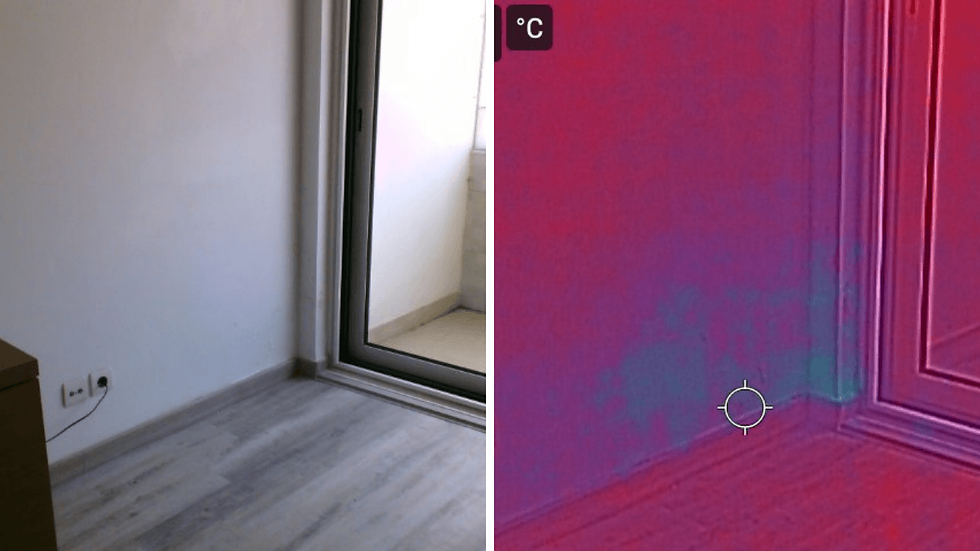
A targeted roof inspection can combine visual assessment, thermal imaging, moisture detection, and drone photography to help trace moisture patterns and investigate inaccessible areas of the roof. Identifying the likely source early can reduce unnecessary repairs and help prevent a relatively small defect from developing into more extensive moisture damage.
Why the Source of a Roof Leak Can Be Difficult to Find
Finding the source of a roof leak is not always straightforward. The point where water becomes visible inside a property may be several metres away from the original entry point. Water can travel along roof timbers, membranes, insulation, and other building materials before appearing as a stain or damp patch internally.
Relying on visible defects alone may not reveal the full moisture path. Combining external roof assessment with internal moisture mapping and thermal imaging can provide a clearer picture of where further inspection is needed.
Real Examples from Work in Cascais
In Cascais, hairline cracks in ceramic roof tiles are a common finding during roof inspections. These cracks can be almost impossible to see from ground level, but may still allow rainwater to penetrate the roof structure.
Damage can sometimes occur when roof tiles are walked on during the installation or maintenance of satellite dishes, solar panels, air-conditioning systems, or other equipment. The homeowner may not realise that a tile has been damaged until staining, damp patches, or other signs of water ingress begin to appear internally.
Coastal properties can also face additional exposure from wind-driven rain, salt-laden air, and changing weather conditions. Areas such as Guincho, Birre, Quinta da Marinha, and Cobre may be particularly exposed depending on the property's location, orientation, and roof condition.

Why Early Roof Leak Detection in Cascais Matters
The earlier a roof leak is identified, the greater the opportunity to address the problem before moisture spreads into surrounding building materials. A damaged or cracked tile may require a relatively straightforward repair, while an undetected leak can eventually affect ceilings, insulation, timber, and other parts of the building structure.
Ongoing water ingress can contribute to mould growth, deterioration of timber, damage to ceilings and finishes, corrosion of metal components, and potential electrical safety concerns.
Clear Inspection Findings Can Help Guide Repairs
A detailed roof inspection does more than identify an area of concern. Photographs, drone imagery, moisture readings, and other inspection findings can provide useful evidence when discussing the problem with roofing or waterproofing contractors.
Having clearer information about the location and nature of a suspected defect can reduce unnecessary guesswork and help property owners obtain more relevant repair quotations. Where appropriate, inspection findings can also highlight areas that require further specialist assessment before remedial work begins.
Frequently Asked Questions
Can the leak entry point be far from where the stain appears?
Yes. Water can travel through roof structures, insulation, and other building materials before becoming visible inside the property. This is why the location of an internal stain does not always correspond with the point where water is entering the roof.
Do I need to wait for rain before booking a roof leak inspection?
Not necessarily. However, inspecting during or shortly after rainfall can sometimes make active moisture patterns easier to identify. Thermal imaging can highlight temperature anomalies that may require further investigation, while moisture meters can help assess affected areas internally.
Can cracked roof tiles be repaired instead of replaced?
This depends on the type, location, and condition of the damage. In some cases, repair may be possible, while in others, replacement is the more appropriate long-term solution. The condition of the surrounding roof should also be considered.
Finding the Source Before the Damage Spreads
A roof leak may begin as a relatively small defect, but ongoing water ingress can eventually affect ceilings, insulation, finishes, and other parts of the property.
Combining visual assessment with thermal imaging, moisture detection, and drone roof inspection can help build a clearer picture of where water may be entering and which areas require closer investigation. The aim is to identify the source as early as possible so that repairs can be properly targeted before the damage becomes more extensive.



Comments