

Roof Leaks in Portugal: Causes, Warning Signs and How to Prevent Damp

How Roof Leaks Cause Damp Problems Inside a Property
Roof leaks in Portugal are one of the most common causes of damp ceilings, mould growth, and hidden moisture damage. In many Portuguese homes, particularly those with tiled roofs and parapet walls, water can enter through small defects that develop over time. Because water often travels through the roof structure before becoming visible indoors, the source of a leak is not always where the damp first appears.
For this reason, identifying the true source of a roof leak often requires more than a visual inspection, as the point where water becomes visible is not always where it entered the roof.

Common Causes of Roof Leaks in Portugal
Several different roofing defects can allow water to enter a building. Some of the most common issues are related to parapet walls, roof tiles, ridge caps, chimneys, and gutter systems.
Parapet Wall Waterproofing Failures
Parapet walls are one of the most common sources of roof leaks in Portuguese properties. Over time, flashing installed where the roof meets the parapet wall can degrade, crack, or delaminate, allowing rainwater to penetrate behind the waterproofing layer.
Another commonly overlooked area is the top of the parapet wall itself. During heavy rainfall, water can collect on this horizontal surface. Without effective waterproofing, moisture can gradually penetrate the structure below.
Parapet walls are also exposed to significant sun exposure because the top of the wall receives heat from multiple directions throughout the day. This repeated heating and cooling cycle can cause paint coatings to deteriorate more quickly.
In many cases, painters focus on the visible exterior surfaces but neglect the top of the wall, which is actually one of the most vulnerable areas for water ingress.
Pro Tip: Applying a proper waterproof membrane to the top of parapet walls often provides far better long-term protection than relying on paint coatings alone.
Cracked or Broken Roof Tiles
Cracked or damaged roof tiles are another major cause of roof leaks.
Even small hairline cracks can allow water to penetrate the tile surface. During heavy rain, moisture can slowly pass through these cracks and reach the roof underlay or the roof structure beneath.
Broken tiles are more obvious but can still go unnoticed if they are located high on the roof or hidden behind overlapping tiles.
Over time, repeated rain exposure can allow significant amounts of water to enter the roof structure, eventually causing damp ceilings, timber deterioration, insulation damage, or mould growth.
Regular roof inspections are important because damaged tiles can often be replaced before they lead to more serious moisture problems.
Ridge Cap and Apex Failures
The ridge cap at the apex of a tiled roof can also become a source of leaks.
Ridge tiles are usually fixed in place using cement mortar. However, clay roof tiles and cement expand and contract at different rates when exposed to temperature changes.
Over time, this movement can create small cracks between the ridge cap and the tiles beneath it. These cracks may allow rainwater to penetrate into the roof structure.
In some cases, ridge caps can even loosen or detach completely.
When cracks are discovered early, flexible sealants such as polyurethane can sometimes be used to seal small gaps while still allowing for movement between the different materials.
Chimney Waterproofing Problems
Chimneys are another common location where roof leaks develop.
If the flashing around a chimney is poorly installed or deteriorates over time, water can penetrate the roof where the chimney meets the roof surface.
Another common problem develops behind the chimney, where rainwater flowing down the roof can become trapped. Without proper drainage and flashing, moisture may gradually penetrate the roof structure.
Proper flashing and drainage design are essential to ensure that water is directed safely away from the chimney.

Box Gutters and Drainage Issues
Box gutters can also create roof leak problems, particularly when they are difficult to access for maintenance or repair.
In some roof designs, roof sheets overlap the gutter area, making it difficult to inspect or clean these sections without removing part of the roofing material.
If debris accumulates or waterproofing within the gutter deteriorates, water may begin to overflow or seep into the roof structure.
Because these areas are often hidden from view, problems can develop gradually before becoming visible inside the property.
How Roof Leaks Are Diagnosed
Diagnosing roof leaks can sometimes be challenging because the point where water enters the roof is not always the same place where damp becomes visible inside the house.
Roof leak investigations typically combine several diagnostic methods, including visual roof inspections, thermal imaging, moisture detection equipment, drone roof inspections, and internal assessments to trace hidden water ingress back to its source.
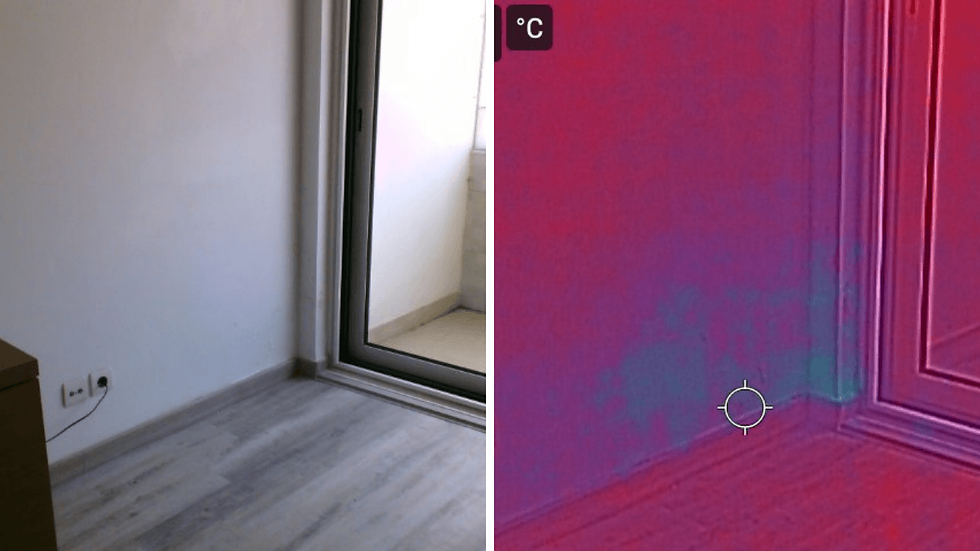
Thermal imaging can identify temperature anomalies associated with hidden moisture within ceiling cavities and wall structures, helping inspectors narrow down the likely source of water ingress.
Drone roof inspections are particularly useful for identifying roofing defects safely, especially on high or difficult-to-access roofs where traditional inspections may be unsafe or impractical.
Why Roof Leaks Should Be Addressed Quickly
Roof leaks should always be investigated as soon as they are suspected, as this is especially important in Portugal.
Even small leaks can gradually cause significant damage to building materials, insulation, timber roof structures, and ceiling finishes if they are allowed to continue over time. Prolonged moisture can also affect a property's structural integrity, contribute to mould growth, reduce indoor air quality, and increase repair costs. Early detection allows repairs to be carried out before more serious damage develops.
Persistent moisture can also contribute to mould growth inside the property, which may affect indoor air quality and create additional repair costs.
Early detection allows repairs to be carried out before more serious structural damage develops.
Regular roof inspections, therefore, play an important role in protecting the long-term condition of a property and reducing the risk of expensive future repairs.
Why Professional Roof Inspections Matter
Many roof leak problems are not immediately visible from ground level.
Many roof defects remain hidden until moisture has already caused damage inside the property. A comprehensive roof inspection helps identify these problems before they develop into more serious structural issues.
The Protimeter Surveymaster measures moisture levels within walls and ceilings without causing damage, helping confirm whether damp is associated with an active roof leak. Combined with drone roof inspections and a thorough assessment of the property, it provides a clearer understanding of where moisture is entering the building.
Whether you require a property inspection in Cascais, property inspection in Lisbon, or elsewhere in Portugal, identifying roof defects early can help prevent expensive repairs, damp problems, and long-term moisture damage.
Conclusion
Roof leaks are one of the leading causes of damp and moisture damage in Portuguese homes.
Problems involving parapet walls, cracked roof tiles, ridge caps, chimneys, and box gutters can all allow water to penetrate the building structure over time.
Because water can travel through roof structures before becoming visible internally, identifying the true source of a leak often requires professional inspection methods.
Regular roof maintenance and early inspections are essential for protecting properties from long-term moisture damage, mould growth, and costly structural repairs.
Frequently Asked Questions
What are the first signs of a roof leak?
The first signs of a roof leak are often damp patches on ceilings, peeling paint, mould growth, bubbling plaster, or a musty smell inside the property. In some cases, water may travel through the roof structure before becoming visible internally.
Can a small roof leak cause serious damage?
Yes. Even a small roof leak can gradually damage insulation, timber roof structures, plasterboard ceilings, and internal finishes over time. Persistent moisture can also contribute to mould growth and indoor air quality problems.
Why are parapet walls common leak points in Portugal?
Parapet walls are highly exposed to rain and strong sun exposure throughout the year. Over time, waterproofing membranes, flashing, and paint coatings can deteriorate, allowing moisture to penetrate into the structure.
How are roof leaks detected during a property inspection?
Professional roof inspections may involve visual inspections, moisture meters, thermal imaging cameras, and drone surveys. These tools help identify hidden moisture and locate the likely source of water ingress.
Can cracked roof tiles cause damp inside a house?
Yes. Even small cracks in roof tiles can allow water to pass through during heavy rain. Over time, this moisture can reach the roof structure and eventually appear as damp staining or mould inside the property.
Are drone roof inspections useful?
Drone inspections are extremely useful for inspecting difficult-to-access roofs safely. They allow inspectors to identify broken tiles, damaged flashing, blocked gutters, and other roofing defects without walking directly on fragile roof surfaces.
How often should roofs be inspected?
Roofs should ideally be inspected regularly, especially after severe storms or heavy winter rainfall. Preventative inspections can help identify small defects before they develop into expensive moisture or structural problems.



Comments