

Damp in Portuguese homes

Damp in Portuguese homes is one of the most common problems faced by homeowners and property buyers. While peeling paint, musty odours, and mould are often dismissed as part of coastal living, they usually indicate excess moisture that requires further investigation.
Whether the cause is rising damp, condensation, or water ingress, identifying the source is the first step towards preventing long-term damage.
Understanding why damp develops in Portuguese homes can help you protect both your property and your investment.
Why Damp in Portuguese Homes Is So Common
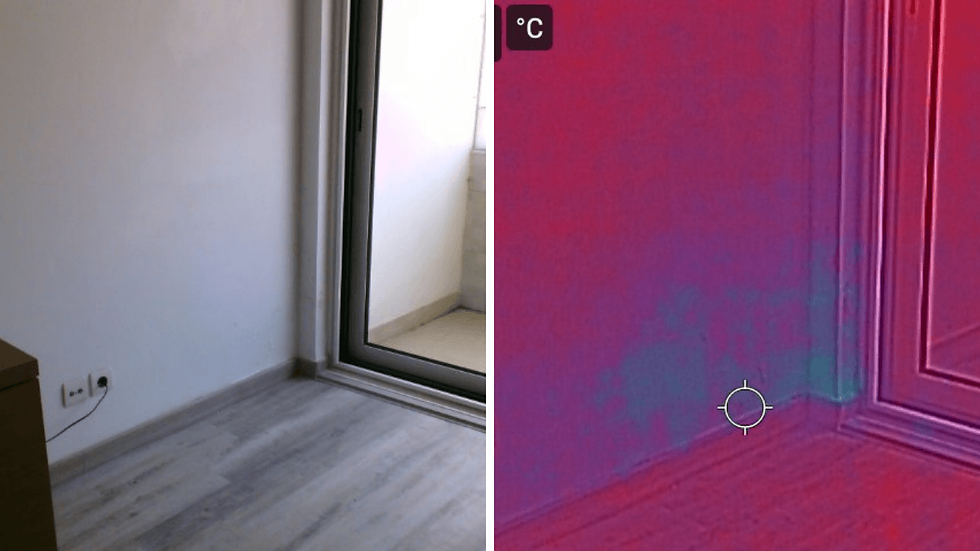
Because different types of damp can produce similar symptoms, identifying the true source is essential before any repairs begin. During a property inspection, moisture readings, thermal imaging, and a visual assessment help distinguish between condensation, rising damp, and water ingress, allowing the correct solution to be identified.
Portugal's climate also plays an important role. Coastal humidity, seasonal rainfall, and solid masonry construction all contribute to damp in Portuguese homes, particularly where waterproofing or ventilation has deteriorated over time.
To prevent this, the exterior walls should be sealed and painted with a 100% acrylic waterproof paint. A high-quality acrylic coating creates a long-lasting barrier against moisture ingress and protects the building structure.
How Rising Damp Develops in Portuguese Homes
Rising damp is another widespread problem found in older Portuguese homes.
Traditionally, many houses were built with elevated entryways — steps leading up to the front door — creating natural protection against ground moisture. However, modern renovations often raise patio or ground levels, unintentionally allowing water to reach the walls. This traps moisture at the base of the structure and causes water to rise through the wall, sometimes as high as one metre.
Once that happens, a long-term solution often involves installing a new damp-proof barrier. This is typically achieved by drilling small holes at regular intervals and inserting damp-proofing rods, such as Dryrod damp-proofing rods, or an equivalent system designed to create a chemical barrier within the wall. This helps prevent moisture from continuing to rise through the masonry.

Condensation and Indoor Humidity
Even without leaks, high humidity is a major contributor to damp in Portuguese homes. Everyday habits such as drying laundry indoors, poor ventilation, or not wiping down bathrooms after showers allow moisture to build up and lead to mould growth.
How to reduce indoor humidity:
Reducing indoor humidity starts with improving ventilation. Opening windows daily, avoiding drying clothes indoors where possible, using dehumidifiers in problem areas, and wiping down bathroom surfaces after showering can all help reduce condensation and lower indoor moisture levels.
Ageing Damp-Proof Courses in Portuguese Homes
Even houses that originally had a damp-proof course (DPC) can develop moisture problems over time. These protective layers degrade, allowing water to penetrate.
When re-plastering or repairing walls, homeowners should use breathable, waterproof plaster rather than traditional cement render, which traps moisture inside the walls and worsens the problem.
Signs of Damp to Watch For
Common signs of damp in Portuguese homes include peeling or blistered paint, musty odours, mould growth, lifting or warped floorboards, flaking plaster near skirting boards, and walls that feel cold or clammy. These symptoms often indicate water ingress, rising damp, or condensation that requires further investigation.
Conclusion
Damp in Portuguese homes is common, but it should never be ignored. Whether the cause is rising damp, condensation, or water ingress, identifying the source early helps prevent mould growth, structural deterioration, and unnecessary repair costs.
If you're unsure where moisture is coming from, a detailed assessment with thermal imaging and moisture-detection equipment can provide a clearer understanding of your property's condition before the problem becomes more serious.
Frequently Asked Questions
QUESTION: Why are Portuguese homes more prone to damp?
ANSWER: Portugal’s humid winters, concrete-block construction, and limited ventilation make homes especially vulnerable to moisture, mould, and condensation.
QUESTION: How do I tell the difference between rising damp and a leak?
ANSWER: Rising damp starts at the base of walls and moves upward. A leak causes isolated wet patches higher on walls or ceilings. Thermal imaging confirms which one it is.
QUESTION: Can damp affect my health?
ANSWER: Yes. Damp and mould can trigger allergies, asthma, headaches, respiratory irritation, and sleep problems — especially in bedrooms.
QUESTION: What causes damp problems in older Portuguese properties?
ANSWER: Many older homes lack modern waterproofing, have worn damp-proof courses, or have exterior walls that were never sealed with acrylic waterproof paint.
QUESTION: Will repainting over damp solve the problem?
ANSWER: No. Painting over damp traps moisture and makes it worse. You must fix the source of moisture before repainting.
QUESTION: Can a dehumidifier get rid of damp completely?
ANSWER: No. A dehumidifier helps control indoor humidity but cannot fix leaks, rising damp, or structural moisture ingress.
QUESTION: When should I call a professional for damp?
ANSWER: If you see blistering paint, mould patches, musty smells, or cold, clammy walls, it’s time for a professional inspection with thermal imaging and a moisture meter.
QUESTION: Can thermal imaging detect damp behind walls?
ANSWER: Yes. Thermal imaging identifies hidden moisture, cold bridges, leaks, and insulation failures long before mould becomes visible.



Comments