

Rising Damp in Cascais: Treating Hollow-Core Walls

Rising damp in Cascais can be particularly challenging to treat in properties built with hollow-core brickwork. Unlike solid masonry, these walls contain internal cavities that can affect how conventional damp-proofing treatments spread through the structure.
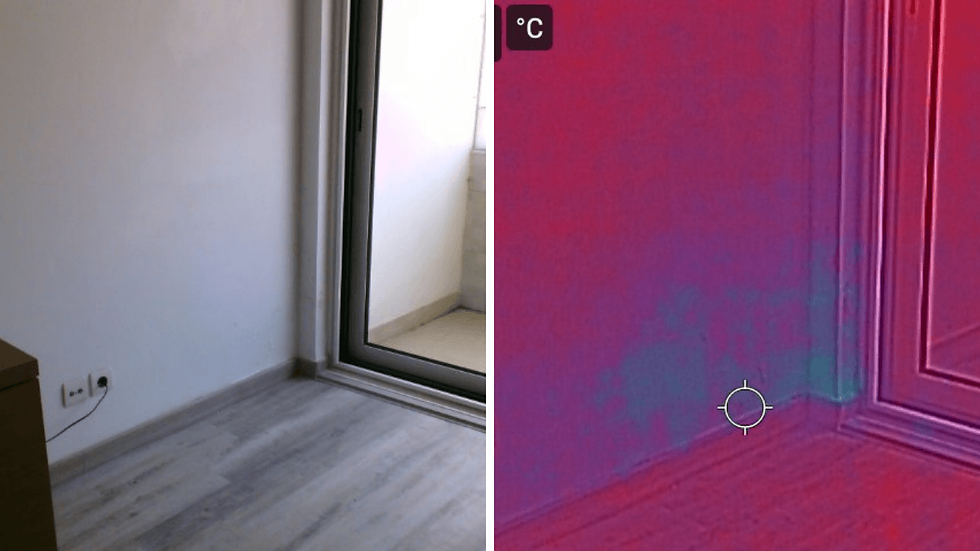
Rising damp develops when ground moisture moves upward through porous building materials by capillary action. As the moisture travels through the wall, it can carry dissolved salts that contribute to damaged plaster, peeling paint, and deterioration of interior finishes.
Treating the visible damage alone will not stop the moisture. The challenge is creating an effective damp-proof barrier within a wall construction that contains internal cavities.
Understanding a property’s structural integrity and wall construction is also important when investigating persistent moisture problems, as different building materials and construction methods can influence how moisture moves through the structure.
Why Conventional Chemical DPC Injection May Not Work
Chemical damp-proof course (DPC) creams are typically injected into a line of drilled
holes to create a moisture-resistant barrier within the wall.
In hollow-core brickwork, however, the internal cavities can make application more difficult. Injected material may enter voids rather than remaining within the intended treatment area, potentially preventing an even and continuous barrier from forming.
For this type of wall construction, additional preparation may therefore be required before a chemical DPC treatment can be applied effectively.
The Bilinear Cavity Injection Approach
The principle behind this approach is to first create a more consistent treatment zone within the hollow section of the wall. A cementitious injection mortar is introduced into the internal cavities through two staggered lines of drilled holes.

In this approach, the primary injection line uses 12 mm boreholes spaced approximately 80 mm apart, with a second staggered line positioned around 50 mm above. The second line helps the injection mortar reach interconnected cavities and gaps that may not have been filled during the initial application.
Once cured, the injected mortar creates a more stable internal zone into which the chemical damp-proof treatment can subsequently be introduced.
Allowing the Mortar to Cure
The injected mortar must be given sufficient time to cure before the chemical damp-proof course is installed. This allows the newly created internal treatment zone to stabilise before further drilling and injection take place.
Depending on the injection mortar used, a curing period of around 14 days may be required before the chemical damp-proof course is installed. The exact curing period should always follow the manufacturer's technical specifications.
Installing the Chemical Damp-Proof Course
Once the mortar has cured, a new line of approximately 10 mm injection holes, typically spaced around 120 mm apart, can be drilled into the consolidated treatment zone. A suitable silane or siloxane-based DPC product can then be introduced according to the manufacturer's specifications.
Creating the mortar band first helps provide a more consistent substrate for the damp-proofing treatment than would otherwise exist within cavity-rich hollow brickwork.
The mortar filling and chemical DPC installation should be carried out as separate stages. Damp-proofing products should always be used in accordance with their intended application and manufacturer guidance.
What Happens to Salt-Contaminated Plaster?
Rising damp can carry salts into plaster and other wall finishes. Even after the source of moisture has been addressed, hygroscopic salts can continue absorbing moisture from the surrounding air and may contribute to recurring deterioration.
Where plaster is significantly contaminated, affected material may need to be removed and replaced with an appropriate breathable, salt-resistant system. The extent of removal should be determined by the condition of the individual wall rather than applying the same measurement to every property.
How Long Do Walls Take to Dry?
Walls affected by rising damp do not dry immediately after treatment. Drying time depends on factors including wall thickness, construction materials, ventilation, indoor humidity, and seasonal conditions.
Moisture readings can be taken periodically to monitor how the wall is drying before final decorative finishes are applied.
Understanding Rising Damp Treatment in Cascais
Treating rising damp in hollow-core walls can require a different approach from treating solid masonry. Internal cavities may affect how injected damp-proofing products are distributed, making it important to understand the wall construction before selecting a treatment method.
The Bilinear Cavity Injection approach is designed to address this challenge by first creating a more consistent internal treatment zone before the chemical damp-proof course is introduced. This provides a controlled substrate for the treatment rather than allowing the injected product to disappear unpredictably into larger internal cavities.
The aim is not simply to cover damaged plaster or repaint the affected area. Effective rising damp treatment begins with understanding how moisture is moving through the particular wall construction and selecting an appropriate method to address it.



Comments