

Damp Inspection Cascais: Investigating the Source of Moisture

Damp can appear in many ways, from peeling paint and discoloured walls to musty smells, recurring mould and damaged plaster. However, where damp becomes visible does not necessarily reveal where the moisture originated.
A damp patch on an internal wall may be connected to a roof defect, plumbing leak, condensation, damaged waterproofing or an exterior problem. Water can also move through building materials before becoming visible.
A professional damp inspection in Cascais looks beyond the visible symptom to investigate the conditions within and around the affected area. Understanding the likely source before repairs are planned can help prevent ineffective treatments and provide a clearer picture of the property's condition.
What Can Cause Damp in a Property?
Moisture inside a property can come from several different sources.
Water ingress may occur through defects in roofs, exterior walls, window surrounds, balconies or other exposed areas. Concealed plumbing leaks can also introduce moisture behind walls, beneath floors or around bathrooms and kitchens.
Condensation has a different cause. It develops when humid indoor air meets colder surfaces, particularly where ventilation is limited. Kitchens, bathrooms, bedrooms and areas around windows can therefore be vulnerable.
Moisture close to floor level can have several possible explanations, including external water ingress, plumbing or drainage problems. Its position alone is not enough to establish the cause.
The construction, age, condition and previous repairs of a property can also influence how moisture behaves.
How Does a Damp Inspection in Cascais Work?
A damp inspection begins with the visible evidence. The location, size and pattern of affected areas are considered alongside the condition of surrounding surfaces.
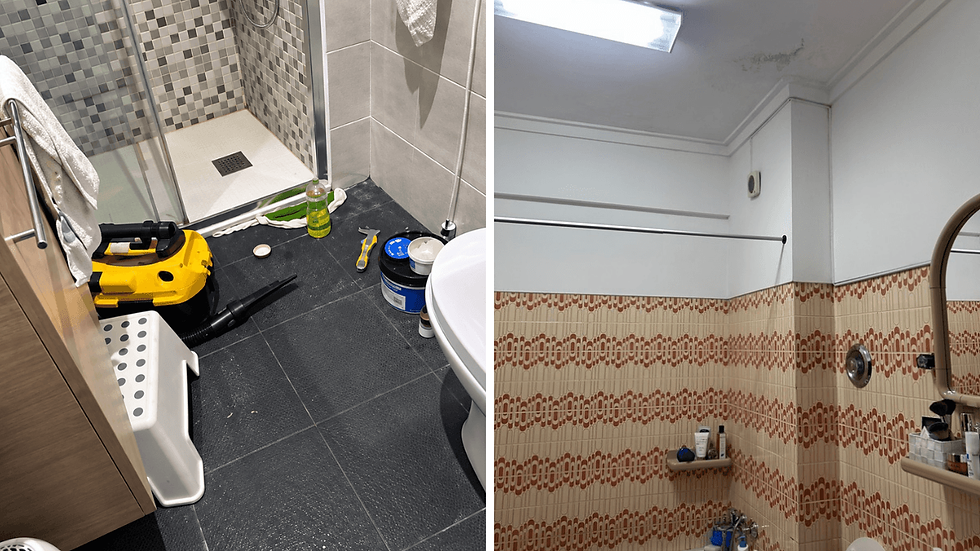
The inspector may also look for related signs such as staining, peeling finishes, mould growth, damaged plaster, condensation or musty odours.
Where appropriate, diagnostic equipment can then provide additional information.
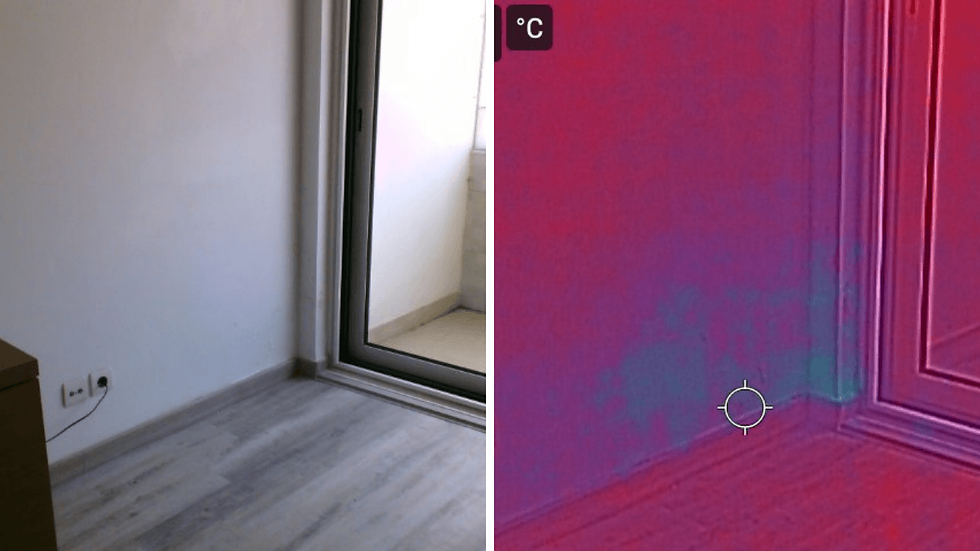
Thermal imaging can highlight unusual temperature patterns, while moisture measurements can help assess conditions within accessible materials.
Other factors may also be relevant, including indoor humidity, surface temperatures, ventilation and possible routes of water entry.
The purpose is to assess the available evidence as a whole rather than relying on one visual symptom or isolated measurement.
Can Thermal Imaging Help Find Hidden Moisture?
Thermal imaging can identify temperature differences across a surface that may not be obvious during a visual inspection.
An unusual thermal pattern can highlight an area that warrants closer investigation. This can be particularly useful where there are no obvious stains but other evidence suggests a possible moisture problem.
However, a thermal camera does not directly see water inside a wall. Temperature differences can have several causes, so thermal images need to be interpreted alongside the physical condition of the property and other diagnostic findings.
Used correctly, thermal imaging is therefore a useful investigation tool rather than a standalone diagnosis.

Why Are Moisture Measurements Important?
Moisture meters provide additional information about conditions within accessible building materials.
A single reading does not automatically identify the source of a damp problem. Results can be influenced by the type of material being tested and factors such as temperature and salts.
For this reason, measurements are more useful when considered as part of a wider pattern. Comparing affected and unaffected areas can help establish whether elevated moisture appears concentrated in a particular location.
Combined with visual observations and other diagnostic information, moisture measurements can help determine where further investigation may be appropriate.
How Can You Distinguish Condensation from Water Ingress?
Condensation is produced by moisture already present in the indoor air. When humid air comes into contact with a sufficiently cold surface, water can form on that surface.
Poor ventilation, high indoor humidity and limited air circulation can all contribute. Windows, bathrooms, kitchens and colder external walls can be particularly susceptible.
Water ingress has a different source. It occurs when water enters the building through a defect or opening, such as damaged roof coverings, failed waterproofing, defective window seals or cracks in exterior finishes.
The two can produce similar visible symptoms, so the surrounding conditions need to be considered rather than assuming the cause from appearance alone.
Does Damp at Floor Level Always Mean Rising Damp?
No.
Moisture close to the base of a wall is sometimes immediately described as rising damp, but several other problems can produce similar symptoms.
Water may enter through an external wall, defective waterproofing or drainage.
Plumbing defects can also contribute to moisture at lower levels.
The construction of the property and the condition of its external elements can also influence what is happening at floor level.
Rising damp can occur, but it should not be diagnosed simply because moisture is visible near the bottom of a wall. The available evidence needs to support the diagnosis.
Where Else Should You Look for the Source?
The room showing signs of damp may not contain the defect responsible for the moisture.
Depending on the location and pattern of the problem, an inspection may therefore consider the roof, flashing, gutters, exterior walls, window seals, balconies and drainage arrangements.
In Cascais, coastal exposure, seasonal rainfall and humidity can place ongoing demands on external building elements. Older properties may also have ageing waterproofing systems or previous repairs that affect how water enters or moves through the building.
Looking at the wider property can therefore provide important context when investigating an internal moisture problem.
Why Does Damp Return After Repairs?
When damp reappears after repainting, replastering or other surface repairs, the underlying cause may still require investigation.
A new coat of paint can improve the appearance of a wall without changing the conditions that caused the original deterioration. Similarly, replacing damaged plaster will not prevent further damage if moisture continues to enter the building.
The same applies to mould. Cleaning or treating affected surfaces can remove visible growth, but persistent moisture can create conditions for mould to return.
This is why identifying the likely source is an important part of deciding what remedial work is actually required.
When Should You Arrange a Damp Inspection?
A damp inspection can be useful when moisture problems are unexplained, recurring or difficult to locate.
For homeowners, investigating persistent damp can help establish what may be causing the problem before further deterioration occurs.
For prospective buyers, signs such as staining, musty smells, peeling paint, recurring mould or unexplained moisture may justify further investigation before committing to a property.
It can also be useful where a property has recently been repaired or renovated but concerns about moisture remain.
The earlier the cause is understood, the easier it is to determine whether further investigation or remedial work is necessary.
What Happens After a Damp Inspection?
The findings from an inspection can help establish the likely source of moisture and identify whether additional investigation is required.
Depending on the evidence, the appropriate next step might involve addressing a roof or exterior defect, investigating plumbing, improving ventilation, repairing waterproofing or carrying out further specialist assessment.
There is no single repair that is appropriate for every damp problem. The correct response depends on what is causing the moisture and how the property is affected.
For property owners and buyers in Cascais, understanding the evidence before deciding on repairs can help avoid unnecessary work and provide a clearer understanding of the building's condition.
Frequently Asked Questions
Can thermal imaging identify the source of damp?
Thermal imaging can highlight temperature patterns that warrant further investigation, but it does not independently establish the source of moisture. Its findings need to be considered alongside other inspection evidence.
Is damp near the floor always rising damp?
No. Moisture at floor level can have several possible causes, including water ingress, drainage problems and plumbing defects. The position of the damp alone is not enough to confirm the diagnosis.
Why can mould return after it has been treated?
If the conditions that allowed mould to develop remain, visible mould may return. Persistent moisture, condensation or inadequate ventilation can all contribute, so addressing the underlying conditions is important.
Should I investigate damp before buying a property in Cascais?
If a property shows unexplained staining, musty smells, recurring mould, peeling finishes or other signs of moisture, investigating the cause before purchase can provide useful information about the property's condition and whether further assessment may be needed.


Comments