

Preparing a Portuguese Property for Winter Rains

Updated: Sep 23
After a long, dry Portuguese summer, it is easy to forget how differently a property can respond once the first serious winter rains arrive. Preparing for winter is not simply about clearing a few gutters or checking whether the roof looks sound. It is about making sure the building can keep rainwater out, move it safely away and manage the moisture that builds up inside.
Late summer and early autumn are a good time to check the property's roof, terraces, balconies, drainage, exterior walls and windows, while also looking for signs that previous rainfall may have exposed a problem.
What should you check when preparing a Portuguese property for winter rains?
Preparing a property for winter in Portugal starts with checking the areas that have to deal with rain, wind and increased moisture. Look at the outside of the property and how rainwater is supposed to move away from the building. Check that gutters, downpipes and drains are clear and that there are no obvious areas where water is likely to collect rather than drain away.
Look around the exterior for visible deterioration that could worsen during prolonged wet weather. Peeling or damaged finishes, staining, cracks, and areas of discolouration can all be worth noting, particularly if they are near roofs, terraces, windows, or other exposed parts of the building.
The aim at this stage is not to diagnose a problem, but to identify anything that deserves a closer look before the wet season begins. A small maintenance issue is generally easier to deal with before repeated rainfall turns it into a larger or more complicated problem.
This is particularly relevant to older Portuguese properties, where roofs, façades and waterproofing systems may have been exposed to years of weather and maintenance may not always have been consistent.
What should you look for on the roof, terraces and balconies before winter?
Roofs, terraces and balconies are among the areas most exposed to winter weather, and they all depend on sound surfaces and effective drainage.
On a roof, look beyond the tiles themselves. Ridge tiles, roof valleys, flashing, chimneys and areas around roof openings can all become potential entry points for water if they have deteriorated or are no longer properly sealed. Gutters and drainage channels should also be clear of leaves and debris so that rainwater can flow away from the property rather than collecting where it should not.
Terraces and balconies require similar attention. A tiled surface can look perfectly sound while the waterproofing beneath it has deteriorated. Cracked tiles, failed joints or blocked drainage outlets can allow water to remain on the surface or penetrate into the structure. In apartments and top-floor properties, staining on the ceiling below may be the first visible sign that something is wrong.
If there is evidence of previous staining beneath a terrace or balcony, or if water remains around low points after rainfall, the area deserves closer attention rather than simply being cleaned or repainted.
Where parts of a roof are difficult or unsafe to access, drone imagery can provide a safer way to view areas that may otherwise be difficult to inspect from the ground. It can help identify visible deterioration or areas that warrant closer attention, although it does not replace every aspect of a physical roof assessment.

Are windows and exterior walls ready for wind-driven rain?
Windows and exterior walls can also become points of water entry during periods of heavy or wind-driven rain. Small defects around openings may not be obvious during a dry-weather viewing but can become apparent once the façade is repeatedly exposed to wet conditions.
Look for cracked render, deteriorated exterior coatings, staining or discolouration around window reveals and sills. Check for damaged or missing sealant around frames, particularly where windows are exposed to prevailing rain. Water can sometimes enter around a window or through the surrounding wall rather than directly through the glass or frame.
Pay particular attention to rooms where damp marks appear after heavy rain. The location and timing of the moisture can provide useful clues, although a visible stain does not necessarily identify exactly where the water entered.

Why does a property that seems dry in summer develop damp in winter?
Summer can hide moisture problems because the building has had months of relatively dry weather to recover. Once winter arrives, increased rainfall, higher humidity and colder internal surfaces can change the way moisture behaves.
Condensation is one possibility. Warm, moisture-laden indoor air can meet colder windows, aluminium frames or walls and form water on those surfaces. Cooking, showering and drying clothes indoors can add to the moisture load. In coastal areas such as Cascais and Estoril, higher humidity can make moisture management more challenging, while some older homes have limited insulation or ventilation.
But not every winter damp patch is condensation. Water entering through a roof, façade, terrace, window or drainage defect can produce similar staining or mould. The timing and location can provide useful clues. A patch that becomes noticeably worse after heavy rain points towards a different line of investigation from condensation that appears mainly on cold mornings.
The distinction matters because the solution depends on the cause. Improving ventilation may help condensation, but it will not repair a defect allowing rainwater into the building.
What can a winter inspection tell you before buying a property in Portugal?
If you are considering buying a property before the rainy season, winter preparation can also highlight issues that may not be obvious during a normal viewing.
Look closely at ceilings beneath terraces and roof areas. Check external walls for staining or deteriorated finishes, and look around windows and doors for signs of previous water entry. Notice whether one room smells noticeably mustier than another. If part of a ceiling or wall has been recently repainted, consider whether there is a straightforward explanation or whether the area needs a closer look.
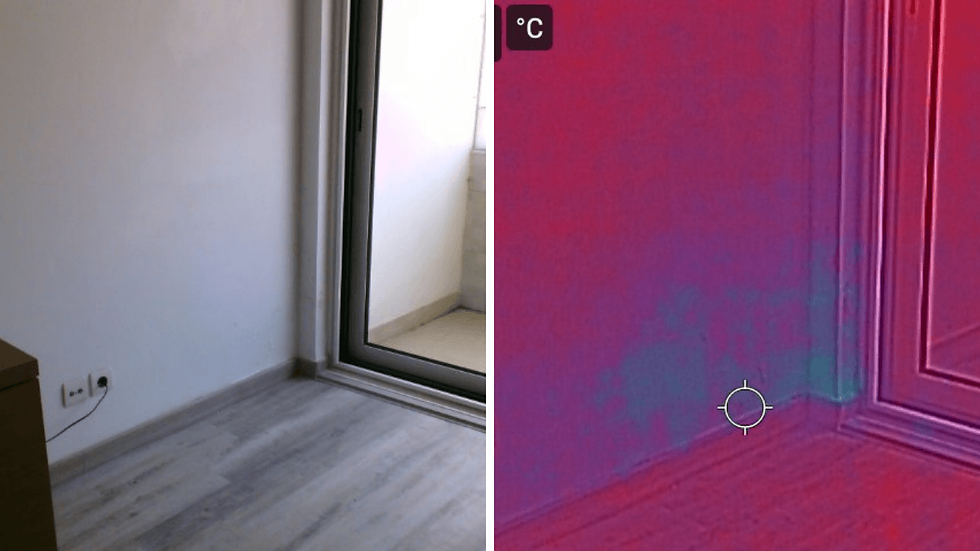
A viewing can identify warning signs, but it cannot always establish what is happening inside a wall, beneath a floor or above a ceiling. Moisture measurement and thermal imaging can provide additional information where there are concerns about moisture or temperature differences that are not obvious visually.
For a buyer, knowing that a defect exists is useful, but understanding what it means is more important. Is it likely to cause further problems? Does it need to be repaired? Or does it need further investigation before a decision is made?
What should you do if you find a damp patch before winter?
Repainting or cleaning an affected area may improve its appearance, but it does not necessarily address the source of the moisture.
The first step is to establish why the moisture is there. It may be rain entering from outside, condensation caused by cold surfaces and high indoor humidity, a plumbing leak, or another building defect. The location of the damp, its pattern, and whether it changes after rainfall can all help narrow down the possibilities.
Timing also matters. If a problem is identified before the winter rains, there is an opportunity to investigate it while the building is relatively dry and deal with maintenance before repeated rainfall makes the situation more difficult to assess.
For a buyer, this can be more useful than simply knowing that a wall has been painted or that a roof has been repaired previously. What matters is knowing whether the repair has dealt with the problem or whether further work may still be needed.
Final thoughts
Preparing a Portuguese property for winter rains is really about understanding how the building will respond when the weather changes. Roofs, terraces and balconies need to shed water effectively. Windows and external walls need to withstand wind-driven rain. Inside the property, ventilation and moisture levels can affect condensation.
For homeowners, checking these areas before the first major storms can identify maintenance issues while they are still manageable. For someone considering a purchase, signs of previous water entry or unexplained damp can highlight questions that are worth answering before committing to the property.
A property does not have to be perfect to be a good purchase. What matters is understanding its condition, knowing which issues are routine maintenance and recognising when something needs closer investigation.
If you are buying a property in Cascais. Lisbon or elsewhere in Portugal, or want to understand the condition of a property before the winter rains arrive, an independent professional property inspection can give you a clearer picture of what is happening beyond what you can see during a normal viewing.



Comments