

What Should You Look for During a Property Viewing in Cascais?

Updated: Oct 1

A property viewing is your first chance to look beyond the way a home has been presented and start assessing how well the property is actually performing.
Before you get distracted by the kitchen, views or freshly painted walls, look for signs of damp and moisture, cracks, roof or drainage problems, uneven floors, sticking windows and doors, and evidence of previous repairs. Check what you can, ask questions about anything that concerns you, and pay particular attention to areas where problems may be hidden rather than obvious.
You don't need to carry out a professional inspection during a viewing. What matters is knowing where to look, what to look for and which signs deserve further investigation.
Whether you're viewing an apartment in Lisbon, a villa in Cascais, a townhouse in Estoril, a traditional property in Sintra or a home elsewhere in Portugal, this checklist will help you make better use of your viewing — and decide whether the property is worth pursuing.
Preparing for a Property Viewing in Cascais
A property viewing is not about inspecting a home like a professional. Instead, it is about spotting clues, asking the right questions, and deciding whether the property deserves a closer look.
Taking a little time to prepare before your property viewing in Portugal can help you focus on what really matters rather than becoming distracted by décor or staging. The more carefully you observe the property, the better prepared you'll be to decide whether it is worth pursuing.
Look Beyond First Impressions
Every seller wants their property to make a good first impression. Fresh paint, tidy rooms and attractive styling can make a home feel warm and inviting, but cosmetic improvements do not always reflect the condition of the building itself.
As you walk through the property, try to look beyond the décor. Does the condition appear consistent throughout, or do certain areas look noticeably newer than others? Has only one ceiling been repainted? Does one wall look freshly repaired while the rest of the room shows its age?
There may be perfectly reasonable explanations, but differences in appearance are worth noting and asking about.
Take Your Time and Look Carefully
Many buyers spend only a short time viewing a property before deciding whether they like it. If you are seriously considering making an offer, slow down.
Open cupboards, look behind curtains, glance inside wardrobes that back onto external walls, and spend a few moments simply observing each room. Look up at the ceilings and down at the flooring rather than focusing only on furniture and finishes.
Small details that are easy to miss during a quick viewing can become important later.
Look for Signs of Damp and Moisture
Moisture is one of the most common issues found in properties across Portugal, particularly in coastal areas such as Cascais, Estoril and Lisbon, where humidity levels are naturally higher.
As you move through the property, look for water stains, bubbling paint, peeling plaster, discoloured walls, musty odours or patches of mould. These signs are often most noticeable around windows, bathrooms, external walls and built-in cupboards.
Visible mould is not necessarily the problem on its own. It can be a sign that excess moisture is present, making it important to identify the source rather than simply treating the symptom.
Check Windows, Doors and Floors
Open and close windows and doors where possible. They should operate smoothly without sticking or requiring excessive force.
A single stiff window may simply need adjustment, but several windows or doors that no longer fit properly could indicate movement, moisture-related swelling or deferred maintenance.
As you walk through the property, pay attention to how the floors feel beneath your feet. Do they feel level? Are there soft or springy areas? Do timber floors creak excessively? Are there cracked tiles or uneven surfaces?
Changes in floor levels can occasionally indicate settlement, moisture damage or previous alterations. While these signs are not necessarily serious on their own, they are worth investigating further before committing to the purchase.
Look Up as Well as Around
Ceilings often provide valuable clues about the condition of a property.
Discoloured patches, repaired sections, sagging plaster or unusual cracking may suggest previous leaks or ongoing moisture problems. Even where a ceiling has recently been repainted, subtle differences in texture or finish can indicate earlier repairs.
Walls are equally important. Fine hairline cracks are often a normal part of a building settling over time, particularly in older Portuguese homes. Wider cracks, bulging plaster or noticeable movement around windows and doors deserve closer attention.
Don't Forget the Outside
The exterior can reveal just as much as the interior.
Walk around the building and assess the condition of the walls, roof, and drainage. Cracked render, damaged roof tiles, blocked gutters, or vegetation growing against external walls may indicate maintenance issues that could lead to moisture problems over time.
If you are viewing an apartment, don't focus only on the individual unit. Look at the condition of the building as a whole, including communal areas, balconies and any visible sections of the roof.
Test What You Can
Although a viewing is not a full inspection, there are a few simple checks you can carry out.
Turn on a tap to check the water pressure, flush the toilet, switch lights on and off, and open cupboards beneath sinks to look for signs of leaks or previous repairs.
These simple observations won't tell you everything, but they can provide useful clues about how well the property has been maintained.
Ask the Right Questions
A property viewing is also your opportunity to gather information.
Ask when the roof was last repaired, whether the property has experienced leaks or damp, whether the electrical or plumbing systems have been updated and if any major renovation work has been carried out.
If something catches your attention during the viewing, ask about it. The answers may provide useful context and help you decide whether a more detailed assessment is needed.
Take Photos and Notes
If permission is given, take photographs of each room, the exterior, and anything that stands out during the viewing. After visiting several properties, it can be surprisingly difficult to remember which house had which features or concerns.
Making a few notes on your phone or in a notebook will also help you compare properties later and remind you of any questions you still need answered.
Visit More Than Once
If the property remains high on your shortlist, arrange a second viewing if possible.
A home can feel very different at another time of day. Traffic levels, parking availability, natural light and surrounding noise can all change between a weekday morning and a weekend afternoon.
A second visit also allows you to look more carefully at anything you may have missed the first time.
Consider the Surrounding Area
While most of your attention will be on the house itself, don't forget to look at the surrounding area.
If you're relocating to Cascais, take a little extra time to explore the surrounding neighbourhood. Consider nearby amenities, public transport, healthcare facilities, supermarkets, restaurants and, if relevant, schools. Think about the journeys you'll make most often, whether it's commuting to work, getting to the beach or simply doing your weekly shopping. A property may tick every box, but the location and surrounding area are just as important as the home itself.
Know Which Issues Need Further Investigation
Not every defect should stop you from buying a property.
Cosmetic issues can usually be repaired or updated over time. However, signs of ongoing moisture, roof defects, significant structural movement, electrical concerns or plumbing problems deserve closer attention before you commit.
The purpose of a viewing is not to decide whether a property is perfect. It is to identify anything that may require further investigation.
Understand What You Can't See
Even the most careful viewing has its limitations.
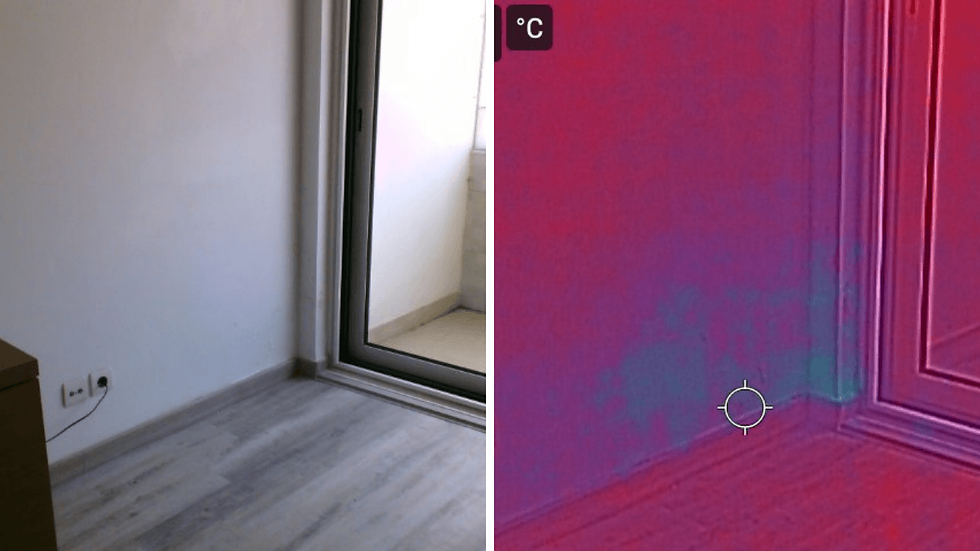
Many significant defects simply are not visible during a standard visit. Moisture hidden behind walls, slow plumbing leaks, roof defects, electrical faults and missing insulation can all exist without obvious signs.
This is where specialist equipment can provide additional information. Thermal imaging cameras can identify temperature differences that may indicate hidden moisture, water ingress or insulation defects before visible damage appears. Moisture meters and wall scanners can provide further information about areas that may require investigation, while laser measuring tools can be used to take accurate measurements and assess dimensions within the property.
The Viewing Is Only the Beginning

A property viewing helps you decide whether a house feels like somewhere you could make your home. It also allows you to identify clues about how well the property has been cared for and whether there are any concerns that deserve closer attention.
By taking your time, looking beyond the décor, asking the right questions and making careful observations, you'll be in a much stronger position to decide whether the property is one you'd like to pursue.
If you decide to move forward, it's worth arranging an independent property inspection before signing the reservation agreement, the CPCV (Contrato de Promessa de Compra e Venda) or the final purchase documents. A professional inspection uses specialist equipment to identify hidden defects that cannot be seen during a standard viewing, giving you a clearer understanding of the property's condition before you commit.
Having that information allows you to move forward with confidence, knowing you've done everything possible to understand the home you're about to make your own.



Comments