

Cold Water Leak Detection Cascais: Using Thermal Imaging to Investigate Hidden Leaks

Updated: Aug 14
Cold-water leaks behind bathroom walls, floors, and tiled surfaces can be difficult to identify when there are no visible signs of water damage.
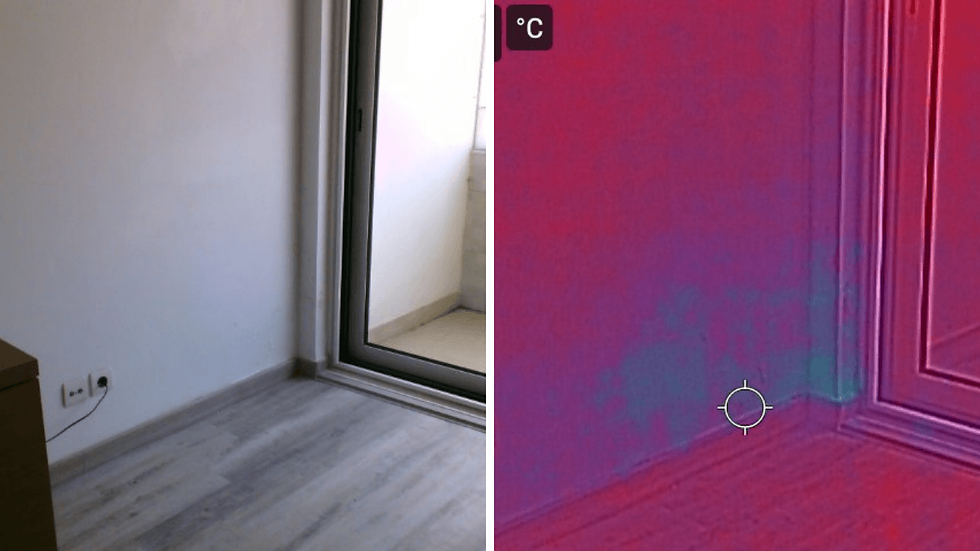
During cold water leak detection in Cascais, thermal imaging can help identify unusual surface temperature patterns that may indicate an area requiring further investigation. However, a thermal camera does not detect water directly. It measures differences in surface temperature, which means environmental conditions can significantly affect what the camera reveals.
Why Temperature Contrast Matters
For a hidden cold-water leak to create a visible thermal pattern, there needs to be sufficient temperature contrast between the affected area and the surrounding surface.
Where appropriate, controlled changes to the indoor environment may help increase this contrast. A warmer surrounding surface can sometimes make a cooler area associated with a cold-water pipe or possible moisture more noticeable on a thermal image.
However, the amount of contrast required varies depending on the construction, materials, water temperature and environmental conditions. There is no single temperature difference that confirms the presence of a leak.
There is no single temperature difference that confirms the presence of a leak. As explained in our article on how temperature can affect thermal readings, changing environmental conditions can cause the same area to appear differently during separate inspections.
Investigating Cold-Water Leaks Behind Tiles

Bathrooms can present particular challenges for thermal inspections. Tiles and other reflective surfaces may produce misleading thermal patterns, while pipework, differences in construction and airflow can also affect surface temperatures.
Thermal findings therefore need to be interpreted carefully. A cooler pattern may indicate a pipe route, moisture, missing insulation or another temperature-related condition.
Where an unusual pattern remains consistent and corresponds with the suspected plumbing route, the area can be investigated further using additional diagnostic methods.
Confirming Thermal Findings
Thermal imaging is most useful when combined with other inspection evidence.
Targeted moisture measurements can provide additional information about accessible materials, while visual evidence and knowledge of the plumbing layout can help determine whether a thermal anomaly may be associated with a hidden leak.
During a thermal imaging inspection, tools such as the FLIR E8 Pro thermal camera can be used alongside targeted moisture measurements where appropriate. Combining different forms of evidence helps avoid relying on a thermal image alone.
Cold Water Leak Detection in Cascais
Hidden plumbing leaks can contribute to damp, deterioration of finishes and conditions that may support mould growth if they remain unresolved. Where recurring damp or mould is present, investigating the underlying moisture source is an important part of understanding why the problem is developing.
For homeowners and property buyers, investigating an unexplained cold area, recurring damp patch or suspected plumbing problem can help identify where further investigation may be required before unnecessary invasive work is undertaken.
A professional property inspection with Thermal imaging provides a non-invasive way to examine surface temperature patterns, but accurate cold water leak detection in Cascais depends on interpreting those findings alongside the wider conditions within the property.



Comments