

Detecting Rising Damp in Cascais: Signs and Diagnosis

Detecting rising damp correctly is important because moisture at the bottom of a wall does not automatically mean that ground moisture is rising through the masonry. Plumbing leaks, penetrating damp, condensation and moisture entering through floors can sometimes create similar visible symptoms.
In Cascais, older properties and buildings with ageing or ineffective damp-proofing can be particularly vulnerable to moisture problems. Coastal conditions may add to the challenges of managing damp, but the location and pattern of moisture need to be properly investigated before deciding on a cause or repair.
What Causes Rising Damp?
Rising damp occurs when moisture from the ground travels upward through porous building materials by capillary action. A functioning damp-proof course is designed to interrupt this movement and prevent moisture from continuing up through the wall.
Where a damp-proof course is missing, damaged or no longer effective, ground moisture may travel into the lower sections of the masonry. External ground levels, poor drainage and persistent moisture around the base of a building can also contribute to the problem.
As moisture moves through masonry, it can carry dissolved salts into plaster and wall finishes. Over time, this may contribute to peeling paint, deteriorating plaster and visible salt deposits.

Signs That May Indicate Rising Damp
Rising damp typically affects the lower sections of walls. Possible warning signs include peeling or blistering paint near floor level, deteriorating plaster, white salt deposits, damaged skirting boards and persistent damp staining.
A musty smell may also be present where moisture has remained for an extended period.
However, these signs are not proof of rising damp on their own. Similar symptoms can result from other moisture sources, which is why diagnosis should come before treatment.
How Detecting Rising Damp Works
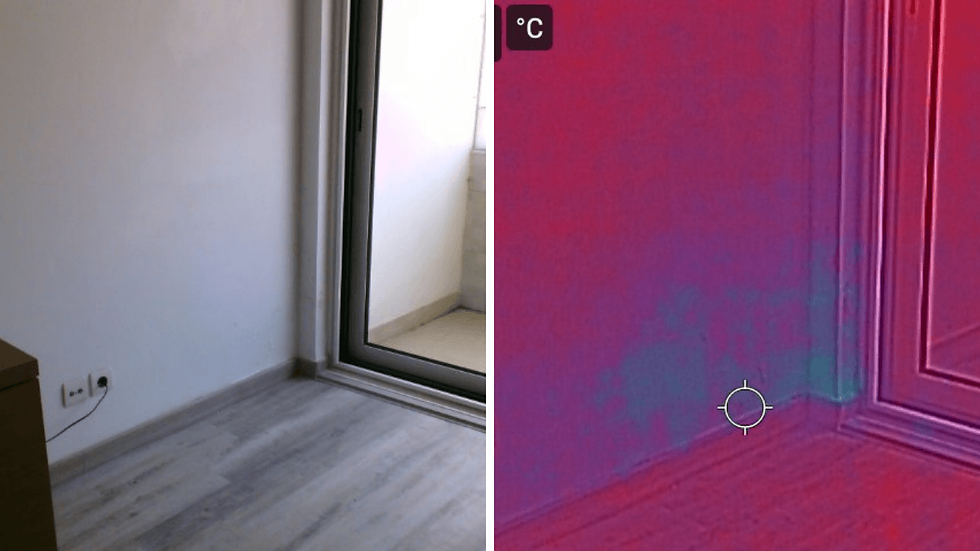
A professional damp and moisture inspection begins by examining where the moisture is appearing and how it is distributed across the wall. Detecting rising damp accurately requires looking beyond the visible signs to understand how moisture is behaving within the building.
During an inspection, thermal imaging using the FLIR E8 Pro thermal camera can help identify temperature patterns that may indicate areas requiring further moisture investigation.
A Protimeter Surveymaster moisture meter can then be used to take comparative readings across affected and surrounding areas.
The location of the moisture is also considered alongside the building construction, exterior ground levels, plumbing, drainage and other potential sources of water ingress.
No single reading or piece of equipment can diagnose rising damp by itself. The aim is to build a clearer picture of the moisture pattern within the property and distinguish between the possible causes.

Why Correct Diagnosis Matters
Different types of damp require different solutions. Treating a wall for rising damp when the actual cause is a leaking pipe or external water ingress will not solve the underlying problem.
Likewise, repainting damaged walls before the moisture source has been identified may temporarily improve their appearance while the damp continues behind the new finish.
Correctly detecting rising damp before repair work begins can help avoid unnecessary treatments and ensure that any remedial work addresses the actual source of the moisture.
When Should You Investigate Damp?
Ideally, unexplained damp should be investigated before major decorating or renovation work is carried out. For property buyers, signs of moisture identified before purchase can also provide useful information about the condition of the building and potential repairs that may be required.
If you already own the property, recurring damp patches, deteriorating plaster or damage that returns after repainting are all reasons to investigate the source rather than repeatedly covering the visible symptoms.
Detecting Rising Damp Before Choosing a Treatment
The appearance of damp at the base of a wall is only the starting point. Understanding whether the moisture is genuinely rising from the ground or coming from another source is essential before deciding how the problem should be treated.
Once rising damp has been properly identified, the appropriate treatment will depend on the construction of the wall and the condition of the existing damp-proof course. In hollow-core walls, for example, conventional injection methods may require a different approach from those used in solid masonry.



Comments